Capabilities

We partner with organizations at every stage from strategy and prototyping through enterprise-scale delivery and long-term modernization.


Strategy & Architecture

Successful applications begin with the right foundation. We help organizations evaluate technologies, platforms, and delivery approaches against your business goals, not against fashion.

  • Web and mobile product strategy
  • Cloud-native, API, and microservices architecture
  • Cross-platform and responsive application design
  • AI-enabled application architecture
  • Performance and scalability planning
  • Security and compliance built into the design

Case Study

Business Challenge

A growing SaaS company had built a resource planning and management platform that successfully replaced spreadsheet-based workflows, but its early success had turned the system into something of a "black box." Years of rapid feature growth and layered architectural patterns had introduced significant complexity, and the team was seeing performance slowdowns on high-load features, data-consistency concerns, operational strain from developers running 24/7 support, and a growing backlog of technical debt with no formal plan to address it. Leadership needed an objective, defensible picture of the platform's health, risks, and priorities.

Solution

We initially conducted a Platform Assessment, an independent, senior-architect-led evaluation of the platform's architecture, documentation, and software development processes. Over roughly a month, our architects ran an on-site discovery session with the client's team, reviewed the codebase and infrastructure, performed a security and dependency review, and interviewed developers, testers, and business stakeholders. We evaluated the full stack (an event-sourced .NET backend, a React frontend, a hybrid cloud deployment, third-party integrations, reporting, and security posture) across the dimensions that drive long-term quality and stability. Findings were peer-reviewed by a second senior architect and delivered as a "stoplight" report written for both technical and non-technical readers, accompanied by a live walkthrough. In a second phase, we provided senior development and architecture support to help the client implement many of the recommendations from the assessment, working alongside their team to turn the prioritized findings into concrete improvements.

Key Outcomes

  • A prioritized "stoplight" report sorting findings into red, yellow, and green so leadership could see at a glance what needed immediate attention versus what to monitor
  • Clearly identified critical risks, including event-sourcing and data-consistency issues, network isolation and security gaps, unreliable backend monitoring, and single points of failure in the reporting stack
  • Specific, actionable recommendations for each area, spanning immediate fixes and longer-term strategy such as architectural simplification, database and job-scheduling optimization, and a public API path
  • Recognition of what was working well (strong code review practices, robust tenant isolation, SOC 2 compliance, solid documentation) so the team knew what to preserve
  • A defensible, cost-and-effort-aware baseline the client could use to build a technical roadmap, guide hiring for a technical leadership gap, and align engineering, product, and business teams
  • Continued senior development and architecture support in a follow-on phase, giving the client hands-on help to implement many of the assessment's recommendations rather than acting on the findings alone


UX & Product Design

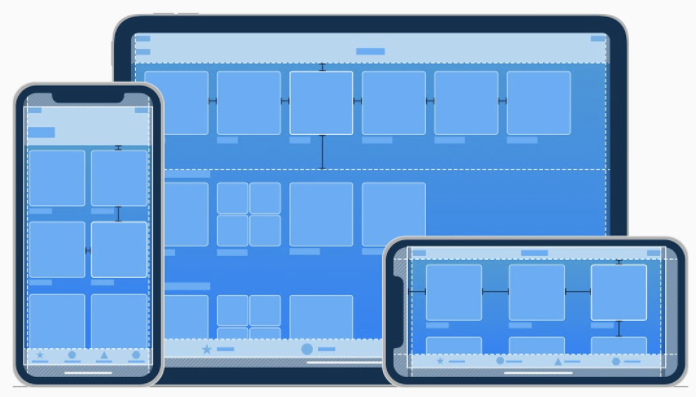
Modern applications have to be intuitive, engaging, and accessible on every device.

  • User research and discovery workshops
  • Wireframing, storyboarding, and UI/UX design
  • Interactive prototypes tested before build
  • Responsive design across web and mobile
  • Design systems and component libraries
  • Accessibility and usability optimization

Web Engineering

Scalable web applications built with today's leading frameworks, including React, Angular, .NET, Node.js, and Java. All built on cloud-native architectures and modern API ecosystems.

  • Enterprise business applications
  • Customer portals and self-service platforms
  • SaaS products and multi-tenant platforms
  • Data visualization and reporting
  • Workflow and process automation
  • Real-time and event-driven systems

Case Study

Business Challenge

A residential construction subcontractor lacked any purpose-built tool for reconciling purchase orders and ordering supplies, leaving teams to spend hours on manual, error-prone back-office work that led to lost profit from pricing discrepancies.

Solution

We built SubAssist, a custom SaaS web application that automates purchase order reconciliation and supply ordering, integrates directly with builder portals, supplier websites, and accounting systems, and uses AI to interpret and learn from different invoice formats.

Key Outcomes

  • Hours of weekly manual work eliminated, cutting labor costs
  • Pricing discrepancies caught automatically, saving thousands each month
  • Purchase orders reconciled against builder contracts with discrepancies flagged instantly
  • Seamless integration with QuickBooks and Sage Intacct automates AR invoices and AP bills

Mobile Engineering

High-quality iOS and Android applications, native or cross-platform with React Native; chosen by balancing user experience, performance, and long-term maintenance cost.

  • Cross-platform and native deployment
  • Offline-first experiences and real-time sync
  • Biometric authentication and secure architecture
  • Push notifications and messaging
  • Camera, media, maps, and geolocation

Case Study

Business Challenge

A real estate investment trust needed a way to give its people real-time visibility into key business data across both web and mobile. The company wanted authenticated users to see live, interactive charts, drill into the underlying data, and be alerted the moment something changed, all on a foundation that could later grow to support custom dashboards, more advanced features, and a broader user base.

Solution

We designed and built a web and mobile real-time data visualization application, delivered in an agile, iteration-based approach. Starting with an MVP to prove out the real-time update architecture, we implemented a shared webview wrapped for native iOS and Android using a cross-platform mobile framework, avoiding the cost of building separate web and mobile applications. We used a lightweight cloud push service to drive live updates and notifications to both browsers and mobile devices, Highcharts for interactive line, pie, and bar visualizations with drill-down, and role-based authentication tied into the company's Active Directory. The platform also included a subscription-based alerting framework, biometric login on mobile, and auditing of logins, subscriptions, and usage. Throughout, we worked side by side with the client team to transfer knowledge and ownership of the codebase and process.

Key Outcomes

  • Real-time, interactive dashboards delivered across web, iOS, and Android from a single shared codebase
  • A subscription-based alerting framework with on-screen alerts, a persistent alert queue, and high-priority push notifications
  • Role-based access tied into Active Directory, controlling which data, charts, and alerts each user can see
  • Faster time to market and lower build cost by wrapping one responsive webview rather than building separate web and mobile apps
  • An extensible foundation ready to grow into custom dashboards, more advanced features, and a wider user base

Quality Engineering & Testing

Quality engineering is a core component of how we ship, run on both physical and cloud-based device platforms for consistent behavior across environments.

  • Automated testing strategy and CI/CD quality gates
  • Functional and regression testing
  • Performance and load testing
  • Security and API testing
  • Cross-browser and cross-device validation

Case Study

Business Challenge

A client in the financial governance space needed to raise software quality and release faster across both web and mobile applications, but lacked the automated testing experience to do it. Manual testing was slow and hard to scale, defects were surfacing late, and there was no repeatable way to validate performance or catch regressions as part of the delivery pipeline.

Solution

We provided a senior QA automation engineer to design and build scalable automated test frameworks for the client's web and mobile applications. Working alongside the client's developers, product managers, and infrastructure team, we developed and maintained test scripts, integrated automated tests into the CI/CD pipeline, built a performance testing suite to surface bottlenecks, and used SQL-based data verification to validate results end to end. We also mentored the client's QA staff to sustain the capability over time.

Key Outcomes

  • Robust, scalable automated test frameworks covering web and mobile applications
  • Automated tests integrated into the CI/CD pipeline, enabling faster and more reliable releases
  • A maintained performance testing suite that identifies bottlenecks before they reach production
  • Defects caught earlier and tracked with detailed reporting, improving overall software quality
  • Client QA team upskilled through hands-on mentoring, strengthening in-house capability

DevOps & Cloud

Modern DevOps and cloud engineering practices that make deployment a routine, and make it obvious what is happening in production.

  • CI/CD pipeline and release automation
  • Cloud deployment strategy and Infrastructure as Code
  • Containerization and orchestration
  • Monitoring and observability
  • App Store and Play Store deployments

Case Study

Business Challenge

A leading human capital management (HCM) software provider needed to modernize the infrastructure of a specialized integrations team following a corporate acquisition. The team was burdened by technical debt, struggling with outdated production databases, a lack of comprehensive infrastructure documentation, and the complex challenge of migrating legacy AWS environments ("brownfield") into the parent company's newer, standardized enterprise architecture ("greenfield"). They required a strategic DevOps vision and hands-on engineering expertise to safely upgrade critical systems, implement modern best practices, and navigate enterprise deployment bureaucracy without disrupting ongoing feature delivery.

Solution

We embedded a dedicated DevOps engineer to partner directly with the client’s engineering and product leadership to define and execute a comprehensive DevOps roadmap. We began by thoroughly documenting the existing infrastructure and creating crucial network and architectural maps to establish a clear baseline. From there, we executed a phased modernization strategy: upgrading legacy production PostgreSQL databases, establishing secure read-replicas for safe data access, transitioning infrastructure-as-code from legacy tools to AWS CDK, and spearheading the complex migration to the new enterprise AWS account structure while aligning with the client's internal CI/CD processes.

Key Outcomes

  • Comprehensive infrastructure documentation and architectural maps that provided immediate clarity and visibility for the engineering team
  • Successful modernization and upgrade of multiple legacy databases, including critical production instances, significantly reducing technical debt
  • Implementation of database read-replicas and secure proxies, enabling the team to safely view and utilize production data without risking live systems
  • Strategic, well-managed migration of legacy AWS environments to a modern "greenfield" account structure, successfully navigating enterprise bureaucracy while maintaining team control
  • Transition to modern Infrastructure-as-Code (IaC) practices using AWS CDK, alongside ongoing CI/CD, security, and operational support
  • A clear, multi-year DevOps vision and plan that fully aligned engineering and product teams for future scalability

AI-Enhanced Applications

Teams are embedding AI straight into their web and mobile platforms. We integrate the features that measurably help, and skip the ones that only demo well.

  • Copilots, assistants, and natural language interfaces
  • Semantic search and knowledge retrieval
  • Intelligent recommendations and predictive analytics
  • Document and content intelligence, workflow automation

Case Study

Business Challenge

A client in the advertising intelligence space had an application that was overly complex, making it difficult and slow for customers to create visualizations and realize value quickly.

Solution

We created a simple, conversational AI agent that lets users get data insights and create charts quickly just by asking questions in plain language.

Key Outcomes

  • Users create visualizations much faster
  • Customers access deeper data insights without advanced training
  • Information is now more accessible, improving decision-making
  • The streamlined user experience helps customers realize application value quickly

Delivery Experience

Technology

python java javascript c# ruby rails django react vue angular mysql oracle postgres elastic search mongodb azure google cloud aws heroku oracle cloud

Why Solution Street?

We combine deep technical expertise with practical delivery experience to help organizations modernize applications, accelerate development, and deliver exceptional digital experiences.

Whether augmenting an existing team or delivering an entirely outsourced solution, we focus on building scalable, maintainable, and future-ready software platforms.

Contact Solution Street to schedule a consultation